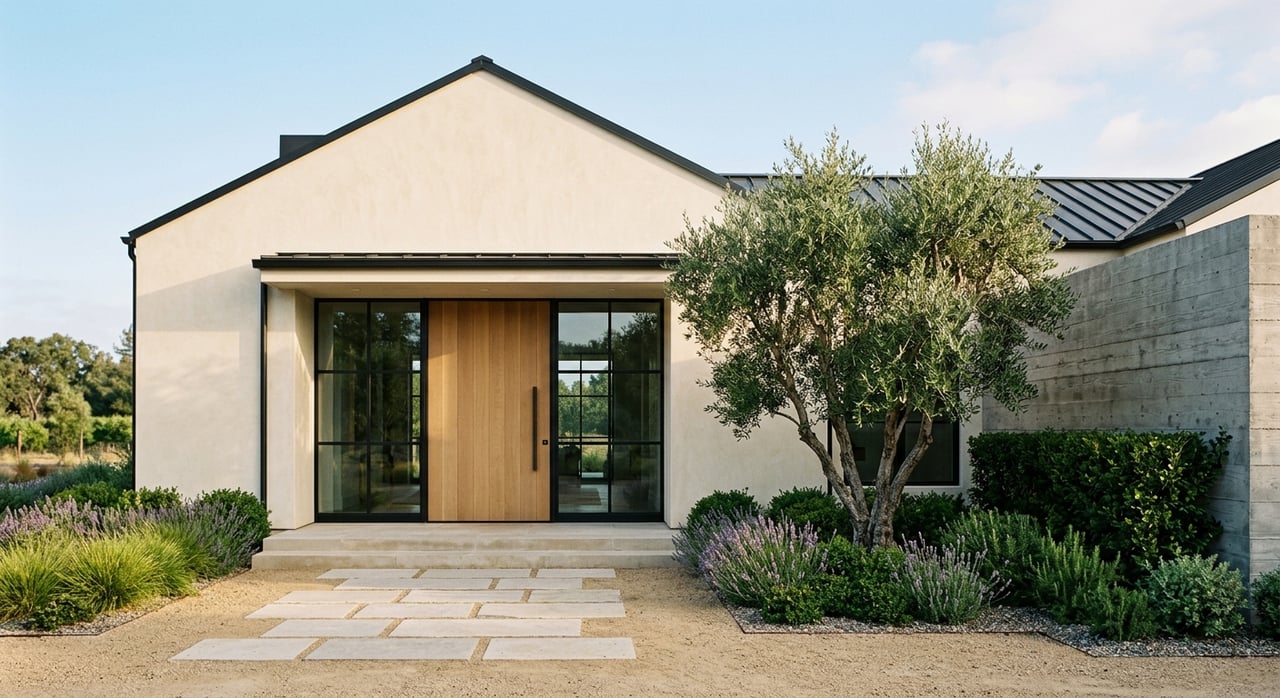
Are you the kind of person who notices stonework before a wine list, or window proportions before a menu? If so, St. Helena has a way of drawing you in. This is a town where historic storefronts, gallery spaces, creative retail, and character-rich homes all work together to create a distinct visual rhythm. If you are exploring Wine Country with a design eye, here is what makes St. Helena so compelling, and why its aesthetic often carries over into the homes buyers remember most. Let’s dive in.
Why St. Helena Feels So Distinct
St. Helena stands out because its downtown feels unusually intact. According to the city, three blocks are part of a National Register historic district, and the area represents Napa County’s largest collection of pre-1948 commercial buildings. That gives the town a layered look that feels grounded, walkable, and visually cohesive.
Main Street adds to that impression with one- and two-story buildings, storefronts that meet the sidewalk, and frequent use of native stone. Instead of reading like a typical retail corridor, it feels scaled for strolling and close observation. You are more likely to notice materials, proportions, and craftsmanship because the setting invites it.
The city also points to another key part of St. Helena’s identity: its role as the commercial center of central Napa Valley, framed by preserved agricultural land. That pairing matters. The historic downtown and the surrounding vineyard landscape create a visual contrast that feels both polished and rural.
Design Shopping Starts on Main Street
If you want an easy entry point into the town’s design culture, start in the Historic Shopping District. The official shopping directory currently lists 6 art galleries, 13 clothing and boutiques, 9 home and garden shops, 8 jewelry stores, and 10 specialty-food businesses. That mix suggests design-oriented browsing is not a side activity here. It is central to the St. Helena experience.
The district is also practical for a self-guided afternoon. The tourism site describes it as a walkable core with free parking, public restrooms, and a Welcome Center. That makes it easy to slow down, move block by block, and notice the details that give the town its character.
Galleries Worth Your Time
Meuse Gallery St. Helena, at 1331 Main Street, sits in a renovated historic space in the heart of downtown. It is described as the largest gallery space and the biggest selection of Simon Bull artwork in the district. For visitors who enjoy bold color and a polished gallery setting, it is a strong first stop.
Caldwell Snyder Gallery, at 1328 Main Street, brings a different kind of scale. It occupies the turn-of-the-century Star Building, which is listed in the National Register, and offers 12,000 square feet of exhibition space with rotating shows. The combination of historic architecture and changing contemporary work reflects the town’s broader design identity very well.
Nimbus Arts, at 649 Main Street, adds a community-centered layer. As a nonprofit, it expands access to art through classes, camps, public events, and school programs. For buyers considering a deeper connection to St. Helena, that kind of creative infrastructure often matters as much as the polished storefronts.
The Napa Valley Museum of Art & Culture, known as The MAC, broadens the picture further. Located at 607 St. Helena Highway, it includes the Ron & Diane Disney Miller Gallery, smaller galleries, and a museum store. It is a useful reminder that St. Helena’s design appeal is not only commercial. It is also tied to art, history, and education.
Home and Décor Stops to Explore
For home-focused shoppers, Napa Valley Vintage Home at 1201 Main Street is one of the clearest expressions of local taste. The shop offers local and European artisanal goods, including linens, ceramics, housewares, furniture, and décor. If you are trying to understand the textures and objects that suit Wine Country living, this is the kind of place that helps define the look.
Carter & Co, at 1231 Main Street, narrows the lens to entertaining. As a dinnerware boutique in the Historic Shopping District, it reflects how table settings and hosting culture show up in the town’s retail mix. In St. Helena, design is often connected to gathering, meals, and indoor-outdoor living.
Starr’s Collective, at 655 Main Street, offers a more eclectic creative mix. The space centers on local artists and handmade goods, with florals, ceramics, sculpture, clothing, jewelry, and small-batch pieces. It captures a side of St. Helena that feels collected rather than overly styled.
Jewelry also plays a visible role in the downtown aesthetic. The shopping guide highlights businesses such as AF Jewelers, E.R. Sawyer Jewelers, Patina Estate Jewelry, and Palladium Fine Jewelry. Patina focuses on Georgian, Victorian, Edwardian, Art Deco, and Retro jewelry, while Palladium emphasizes designer pieces and in-house studio work, both of which reinforce the town’s appreciation for craftsmanship and period influence.
Dining and Culture With Design Appeal
In St. Helena, some of the most memorable design moments happen around food and culture. The Culinary Institute of America at Greystone is one of the strongest examples. The building began as Greystone Cellars in 1889 and was once the largest stone winery in the world. Today it is a historic campus with classes, dining, tours, and a culinary marketplace.
The Saint, at 1351 Main Street, offers a more intimate mood. Set in a restored 1905 bank vault, it uses a candlelit speakeasy atmosphere to frame wine and small plates. It is a good example of how adaptive reuse can feel dramatic without losing a sense of place.
Market Restaurant, at 1347 Main Street, leans into material warmth. It is described as a cozy bistro with rustic stone walls and an old-timey bar, which aligns naturally with St. Helena’s preference for texture, patina, and historic surfaces. Nearby, Station St. Helena transforms a retro gas station into a neighborhood eatery with coffee, pastries, lunch items, pizza, and retail, showing how design-minded reinvention appears across the town.
Cameo Cinema adds another cultural anchor. Founded in 1913, it is California’s oldest continuously operating single-screen movie theater. That kind of continuity matters in a place where history is not background decoration, but part of the daily experience.
Architectural wineries also deepen the visual story. Beringer Vineyards features the Victorian Rhine House with gables, turrets, and stained glass, while Charles Krug Winery is described as Napa Valley’s oldest winery. Even if your main focus is residential design, these landmarks shape what the area feels like and why certain home styles resonate here.
What This Means for Homes
St. Helena’s design story does not stop at downtown storefronts. The city’s historic resources identify a wide range of local residential styles, including Stick/Eastlake, Queen Anne, Shingle, Romanesque, Arts & Crafts, Art Deco, Spanish Colonial Revival, and Mission Revival. General plan materials also point to American Queen Anne, American Craftsman, California Bungalow, vernacular, and ranch-style homes.
That range is part of what makes house hunting in St. Helena visually interesting. You may see more formal historic expression on one street and simpler vernacular forms on another. The town’s architectural language is broad, but it still feels connected by scale, materials, and a strong sense of setting.
The city’s historic inventory notes common vernacular forms with rectangular massing, gabled or hipped roofs, wood-frame construction, extended porches, simple redwood siding, and limited ornamental detail. Those features may sound modest on paper, but in practice they often create the quiet, grounded character design-conscious buyers appreciate most.
Specific city records show how these styles appear locally. Buildings at 1327 to 1337 Main Street are identified as having elements of Queen Anne architecture, while 1371 to 1375 Main Street and 1302 to 1308 Main Street include Italianate elements. Elsewhere, 1915 Main Street is described as Georgian Revival, and 1313 Spring Street as Italian Villa.
Design Cues Buyers Often Notice
When buyers are drawn to St. Helena, they are often responding to recurring details that echo the town’s public spaces. Native stone, historic brick facades, restored commercial buildings, stained glass, porches, and older masonry all contribute to the local visual language. Homes that retain original character often feel especially aligned with the setting around them.
That does not mean every appealing home is formally historic. It means the homes that tend to linger in memory often show some relationship to the town’s established materials, proportions, or craftsmanship. In a market like St. Helena, design value is often about coherence as much as novelty.
For buyers looking at legacy homes, renovated residences, or vineyard-adjacent properties, that context can be useful. A home does not exist in isolation. Its appeal is often shaped by how naturally it fits within the architectural and cultural fabric of St. Helena.
How to Experience St. Helena Like a Design Lover
If you want to understand the town beyond listings and photos, spend a day moving through it slowly. Start with the Historic Shopping District, paying attention to building materials, storefront rhythm, and the scale of the streetscape. Then layer in galleries, home-focused shops, and a meal in one of the town’s adaptive-reuse spaces.
A simple route might include:
- A walk through Main Street’s historic core
- Gallery stops such as Meuse Gallery St. Helena and Caldwell Snyder Gallery
- A home-focused browse at Napa Valley Vintage Home or Carter & Co
- A visit to The MAC or Nimbus Arts for broader cultural context
- A meal or evening stop at Greystone, Market Restaurant, The Saint, or Station St. Helena
By the end of the day, you will have a much clearer sense of why St. Helena feels different from other Wine Country towns. The appeal is not just visual. It is how art, architecture, retail, and everyday living all reinforce one another.
Why This Matters in Real Estate
For design-minded buyers and sellers, St. Helena offers more than beautiful moments. It offers a built environment with continuity, texture, and a strong local identity. That can influence how you evaluate a property, how you position a home for market, and which architectural details deserve the most attention.
In our experience, the most compelling St. Helena properties are often the ones that understand this context. They may be historic, updated, or newly built, but they tend to feel rooted in place. That sense of fit is part of what gives the town its lasting appeal.
If you are considering a purchase or sale in St. Helena and want guidance that balances design sensibility with market clarity, Hillary Ryan Group can help you evaluate the opportunity with a refined, informed approach.
FAQs
What makes St. Helena different from other Napa Valley towns?
- St. Helena stands out for its compact historic downtown, its concentration of galleries and design-oriented shops, and its surrounding agricultural landscape, which together create a strong visual identity.
Where can design lovers shop in St. Helena?
- Popular stops include Napa Valley Vintage Home for artisanal home goods, Carter & Co for dinnerware, Starr’s Collective for handmade pieces, and several jewelry boutiques that reflect the town’s craftsmanship-focused style.
Which St. Helena art spaces are most notable?
- Meuse Gallery St. Helena, Caldwell Snyder Gallery, Nimbus Arts, and the Napa Valley Museum of Art & Culture each offer a different view of the town’s creative scene.
What home styles appear in St. Helena?
- Local records identify styles including Queen Anne, Arts & Crafts, California Bungalow, Spanish Colonial Revival, Mission Revival, Art Deco, vernacular homes, and ranch-style homes.
Why do historic details matter in St. Helena homes?
- Historic materials and features such as stone, porches, masonry, stained glass, and original architectural character often feel especially appealing because they reflect the same design language seen throughout downtown St. Helena.