What does luxury look like when it does not need to announce itself? In Rutherford, it often looks like a long drive lined with trees, a home set quietly into the landscape, and a daily rhythm shaped more by vines, light, and privacy than by spectacle. If you are drawn to estate living in Napa Valley, Rutherford offers a compelling version of luxury that feels grounded, discreet, and deeply tied to the land. Let’s dive in.
Why Rutherford Feels Different
Rutherford sits in the heart of Napa Valley and has its own federally recognized American Viticultural Area, or AVA, established in 1993. According to the Alcohol and Tobacco Tax and Trade Bureau, the appellation covers a roughly 6,650-acre area centered on the valley floor and framed by the Mayacamas and Vaca ranges.
That geography matters because Rutherford does not read like a resort town or an urban luxury enclave. Instead, its identity is shaped by agricultural land, low hills, vineyard corridors, and a long history rooted in Rancho Caymus and the valley’s early settlement patterns, as outlined by Visit Napa Valley’s Rutherford overview.
The result is a place where prestige feels inherited rather than manufactured. Rutherford’s appeal comes from setting, restraint, and continuity with the land.
The Meaning of Quiet Luxury Here
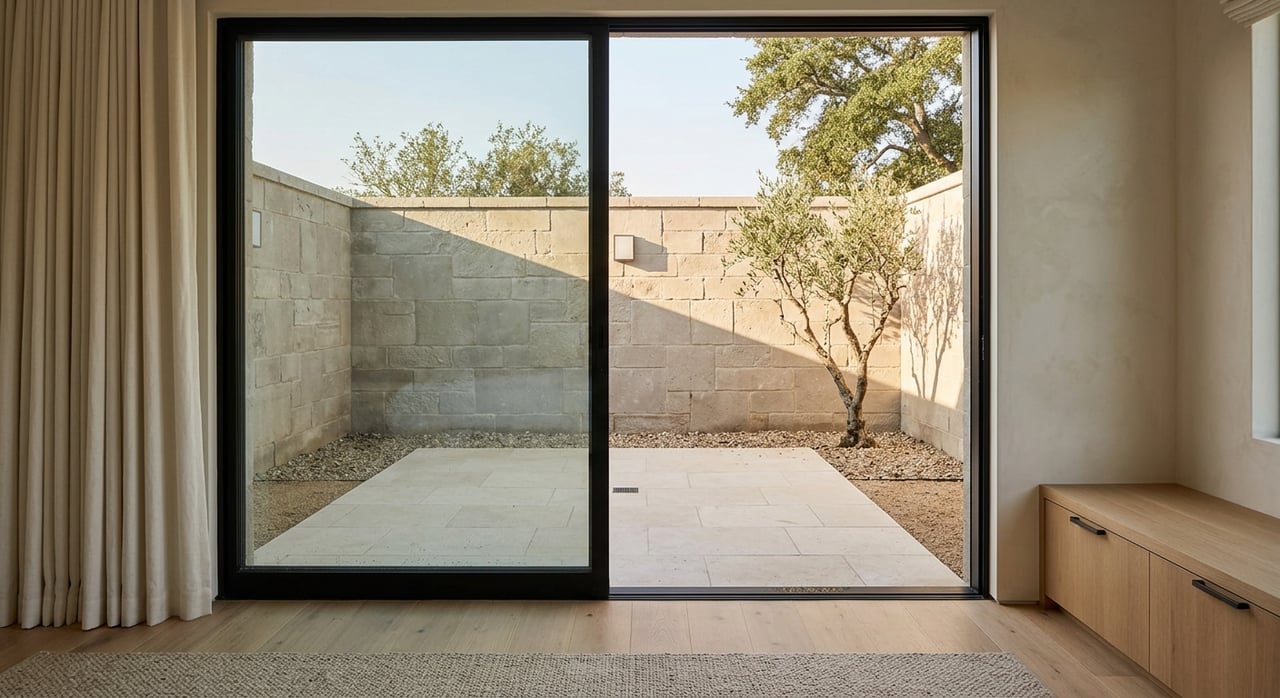
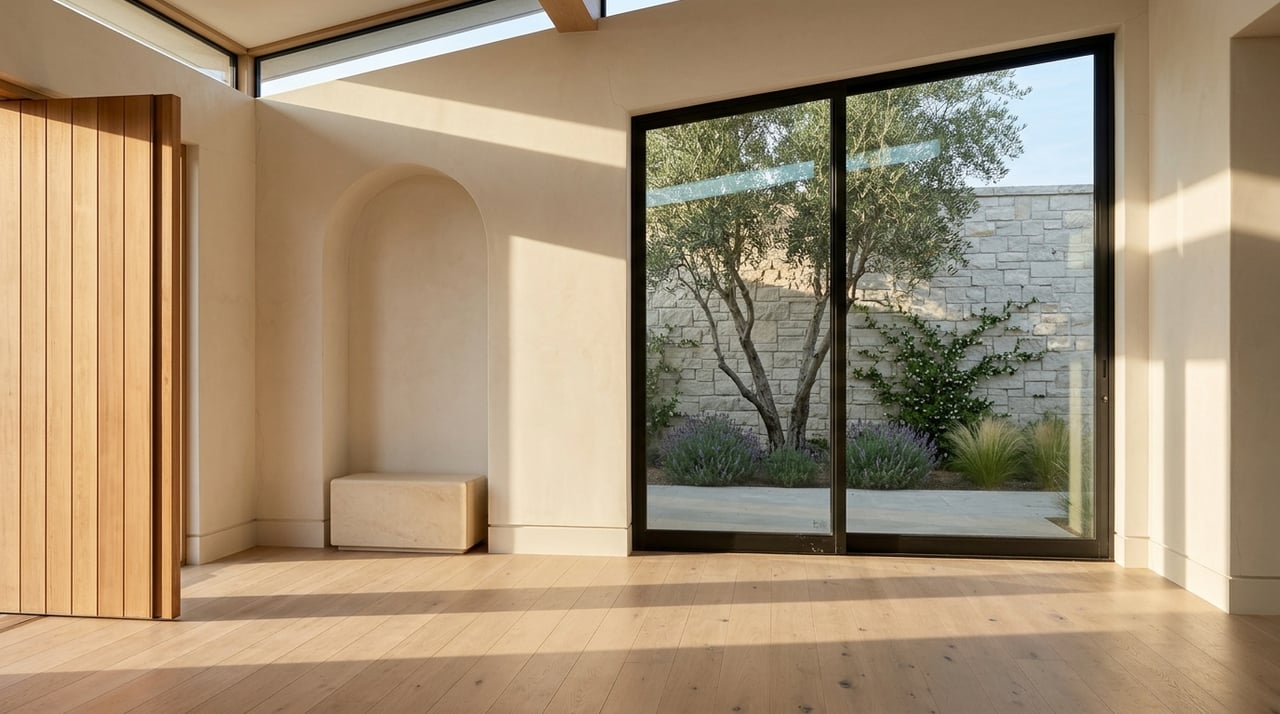
In Rutherford, quiet luxury is less about visible display and more about how a property lives. Privacy often comes from acreage, vegetation, gates, and setbacks. Architecture tends to feel integrated with the site rather than imposed on it.
That framing is supported by how local estates and wineries are described across the region. The Rutherford Dust Society member pages refer to places that are tucked away, secluded among vineyards, hidden in the heart of Rutherford, or screened by mature trees. Those details help explain why the area feels so private even though it is one of Napa Valley’s most recognized names.
If you are looking for estate living that prioritizes calm, land, and discretion, Rutherford stands out. It offers a refined lifestyle without the need for constant activity or a highly visible social scene.
The Bench Sets the Tone
One of Rutherford’s most important distinctions is the benchland. The Rutherford Dust Society appellation page describes the district as about 6 square miles, generally below 500 feet in elevation, with gravelly, sandy, and loamy soils formed by alluvial fans and sedimentary material.
The western Rutherford Bench is especially important to the area’s character. Visit Napa Valley’s appellation guide notes that this side is cooler than the valley floor because it gets less late-afternoon sun and more afternoon marine wind.
For estate living, that bench setting contributes to the overall mood. The land feels textured, layered, and visually calm. Instead of dense development, you find open views, vineyard edges, and homes that often sit back from the road with a stronger sense of separation.
Bench Versus Valley Floor
If you are evaluating property in Rutherford, it helps to understand the basic difference between the bench and the valley floor.
| Area | General Character | Key Context |
|---|---|---|
| Western bench | Cooler, more textured, more influenced by afternoon wind | Less late-afternoon sun, coarser soils |
| Valley floor | Flatter, more fertile, more alluvial | Centered in the broader agricultural plain |
This is not about one area being better than another. It is about understanding how micro-location can shape privacy, views, setting, and the day-to-day feel of a property.
Estate Living Is Land-First
Rutherford is remarkably small at a human scale. Visit Napa Valley lists the population at 164 and describes the area through scenic countryside, intimate winery tastings, and a limited collection of destination amenities.
That small scale is part of the appeal. You are not choosing Rutherford for bustle. You are choosing it for space, quiet, and a setting where the landscape remains the primary visual experience.
A helpful way to think about residential life here is that homes feel layered into agricultural land rather than placed on top of it. The overall pattern is one of vineyards, mature trees, low-slung structures, and long approach drives, with the landscape doing much of the work in shaping privacy and character.
What Daily Life Feels Like
Rutherford’s daily rhythm is shaped by the surrounding wine country environment. Reservation-based hospitality, outdoor spaces, cave tours, and a slower pace define much of the local experience, according to Visit Napa Valley’s town guide.
For you as a homeowner, that can translate into a lifestyle centered on:
- Morning light over vines and low hills
- More privacy and less traffic than busier commercial centers
- Entertaining that feels intimate rather than performative
- A stronger connection to seasons, harvest cycles, and the land itself
This is a very specific kind of luxury. It is composed, low-profile, and closely connected to place.
Architecture Follows the Landscape
Rutherford’s visual language is heavily influenced by estate-winery architecture. That matters because it helps shape buyer expectations for what feels authentic in this setting.
In a feature on Napa Valley architecture, Visit Napa Valley notes that Staglin Family Vineyards in Rutherford was built into a steep hillside so vineyard land and aging oak trees would not be displaced. That approach captures an important local value: the best design often works with the land, not against it.
The same source also describes Napa Valley’s broader architectural tradition as ranging from stately stone, château-inspired forms to newer buildings that recede into the landscape. In Rutherford, that supports a clear visual code for quiet luxury.
Common Design Cues
When estate living feels especially at home in Rutherford, you will often notice features like:
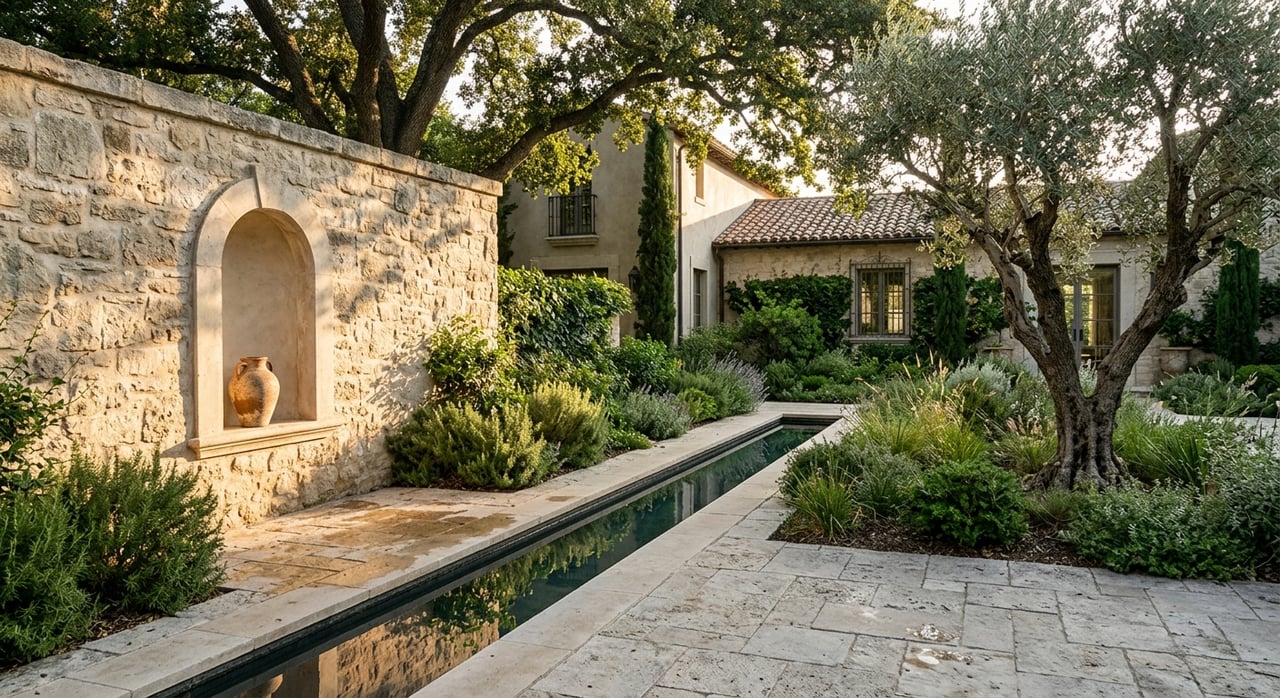
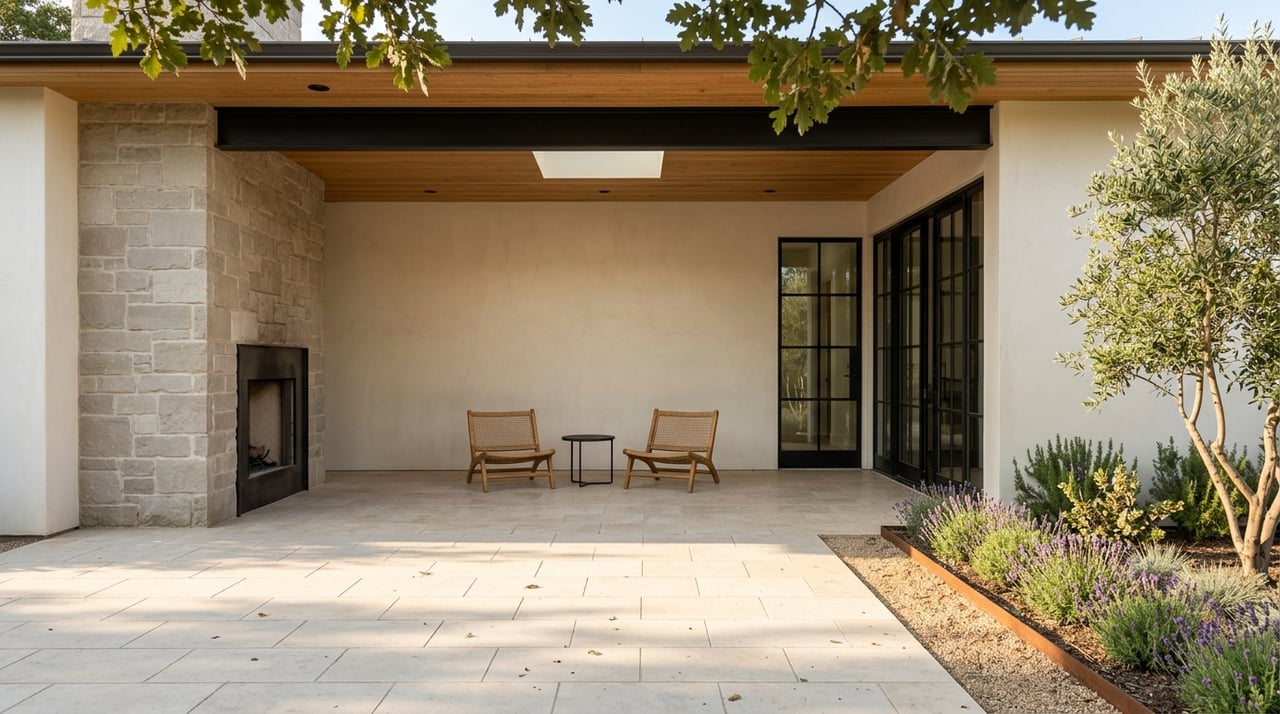
- Stone and timber materials
- Earth-toned palettes
- Terraces and framed vineyard views
- Buildings tucked into hillsides or screened by trees
- Contemporary forms designed to blend rather than dominate
The Rutherford Dust Society member descriptions reinforce this visual pattern with references to Martin Estate’s stone château and Quintessa’s contemporary, scenic setting. Together, those examples point to a local style that values permanence, restraint, and integration with the site.
Wine Culture Shapes the Experience
In Rutherford, wine culture is not a backdrop. It is part of the structure of everyday life. Visit Napa Valley describes the area through intimate tastings, expansive outdoor spaces, cellar and cave tours, and destination dining.
The estate-winery ecosystem is also unusually concentrated. The Rutherford Dust Society membership directory includes a wide range of recognizable producers, from Inglenook and Beaulieu Vineyard to Round Pond Estate, Rutherford Hill Winery, Peju, Honig, Quintessa, and St. Supéry.
For buyers, that concentration supports a lifestyle that feels immersive rather than occasional. Living here means being surrounded by the agricultural and hospitality systems that define Napa Valley at its most iconic.
Stewardship Adds Depth
One reason Rutherford’s luxury feels more lasting than trendy is that land stewardship is part of the local story. The Rutherford Dust Society sustainability page states that its Napa River restoration efforts helped restore 4.5 miles of riverbank and that Rutherford became the first AVA association to achieve 100% participation in the Napa Green Land program in 2020.
That context matters for estate buyers who care about long-term value and the integrity of the setting around them. In Rutherford, preservation and land care are not abstract ideas. They are part of how the area protects the landscape that gives it meaning.
This also reinforces why luxury here feels understated. It is tied not only to beauty, but to continuity, stewardship, and respect for the land.
History Keeps Rutherford Grounded
Rutherford has polish, but it does not feel newly invented. Its sense of place is tied to a much older agricultural and transportation story.
The Rutherford Dust Society’s history of the Rutherford Depot notes that the railroad arrived in 1868 and that the depot is now more than 150 years old and one of Napa Valley’s most identifiable landmarks. Combined with the area’s early land grant history, that gives Rutherford a rooted quality that many buyers find appealing.
For estate living, this means the area’s sophistication comes with depth. The setting feels settled, shaped over time, and less dependent on trends.
Who Rutherford Estate Living Suits Best
Rutherford tends to resonate with buyers who want luxury that is private, design-aware, and land-centered. It can be especially compelling if you value:
- A vineyard-immersed setting
- Discretion and separation from busier hubs
- Architecture that feels tailored to the landscape
- A second home or primary residence with long-term lifestyle appeal
- A property experience shaped by setting more than showmanship
This is not a one-size-fits-all market. In a place this nuanced, property evaluation often comes down to micro-location, land context, design quality, and how the home relates to the broader landscape.
Why Local Guidance Matters
In Rutherford, subtle differences can carry outsized importance. Bench versus valley floor, view orientation, setbacks, site integration, and surrounding agricultural context can all shape how a property lives and how it may be perceived over time.
That is why many discerning buyers and sellers benefit from guidance that goes beyond surface aesthetics. Clear analysis, discretion, and an understanding of both design and land fundamentals can help you make more confident decisions in a market where the best opportunities are often defined by nuance.
If you are considering a purchase or sale in Rutherford, Hillary Ryan Group offers refined representation grounded in local expertise, strategic analysis, and a deep understanding of Wine Country estate living.
FAQs
What makes Rutherford, Napa, different from other Napa Valley communities?
- Rutherford is known for a small-scale, vineyard-centered setting with a strong agricultural identity, private estate character, and a luxury feel that is more understated than resort-driven.
What is the Rutherford Bench in Napa Valley?
- The Rutherford Bench generally refers to the western benchland area of the Rutherford AVA, where cooler conditions, coarser soils, and less late-afternoon sun help shape the landscape and the area’s distinct character.
What does quiet luxury mean in Rutherford real estate?
- In Rutherford, quiet luxury usually means privacy, land-first design, restrained architecture, and estate living defined by setting, materials, and discretion rather than overt display.
Is Rutherford a good fit for vineyard-adjacent estate living?
- Rutherford is especially well suited for buyers seeking vineyard-adjacent estate living because the area’s identity, daily rhythm, and visual character are closely tied to agricultural land and winery estates.
Why is local expertise important when buying or selling in Rutherford?
- Local expertise matters in Rutherford because small differences in site placement, bench versus valley floor location, privacy, and land context can meaningfully affect lifestyle, positioning, and decision-making.