In most real estate categories, size buys leverage. A five-bedroom house typically costs less per square foot than a two-bedroom one. A hundred acres of farmland in most of the country trades for less per acre than ten. Rutherford breaks that pattern, and understanding why matters more than the number on any single listing sheet.
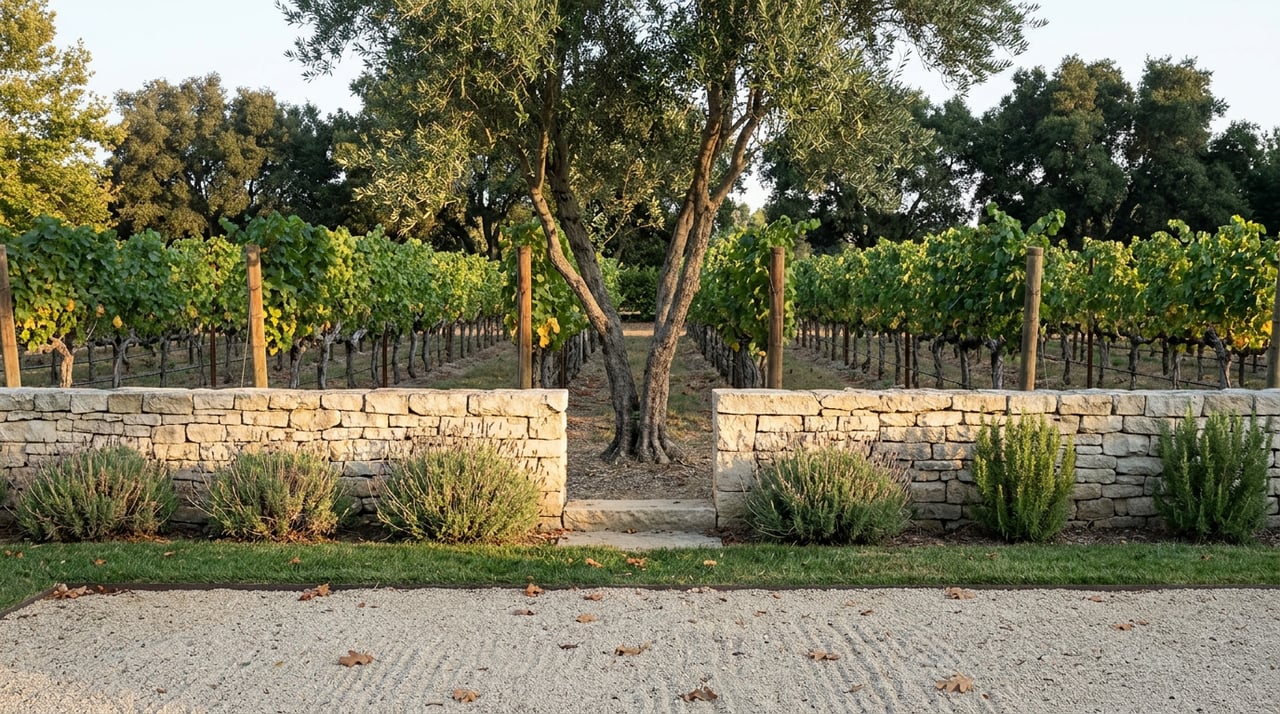
A parcel of well under half an acre, planted entirely to Cabernet Sauvignon and carrying a Rutherford address, will often draw more interest per acre than a much larger holding a short drive down the same road. That is not one unusual sale skewing the data. It is close to the norm in this appellation, and it is one of the clearest signals of what buyers are actually paying for when they choose Rutherford over a neighboring AVA.
The Land Behind the Name
Rutherford's reputation outweighs its footprint by a wide margin. The AVA covers roughly 6,650 acres in total, and only around 1,700 of those acres are actually planted to vine. Most of what a buyer is purchasing when they purchase "Rutherford" is a designation tied to a small, tightly held slice of the valley floor, not a farming input priced by the acre the way corn or almonds are.
That scarcity shows up plainly in the appraisal comparisons agents and lenders use across the North Coast. Vineyard land in Sonoma's Carneros appellation has traded around $80,000 per acre, while land inside the Rutherford appellation has traded well above $300,000 per acre, more than three times the gap. Those two regions sit less than 20 miles apart. The difference has less to do with which grapes ripen better and more to do with what a Rutherford address has come to represent on both a wine label and a deed.
The Part That Runs Backward
Here is where the math gets genuinely interesting for anyone cross-shopping a small Rutherford parcel against a larger one.
A 2025 study published in the Wine Business Journal set out to answer a specific question: why do small vineyards in Napa carry appraised land values that run disproportionately high per acre, at a time when almost every other category of land rewards buyers for scale? The researchers weighed two explanations side by side, testing whether the premium came from strong demand among buyers who want a vineyard as a lifestyle asset rather than a working farm, or from ordinary economies of scale that normally make larger parcels cheaper per acre.
For a buyer standing in front of two Rutherford listings, one three acres and one thirty, this research explains a pattern that would otherwise look like a pricing error. The three-acre parcel is not overpriced. It is priced for a different pool of buyers, one comparing cost of entry into a specific address and a specific set of neighbors rather than cost per ton of fruit produced.
What the County's Own Numbers Say Right Now
Zoom out to the county level and the picture gets more layered, not simpler. Napa County's newest property assessment roll, covering the fiscal year that began this July, shows countywide value growing by just 3.12 percent to $59.3 billion, the smallest percentage increase since 2012, according to Napa Valley Register coverage of the release. Assessor John Tuteur pointed to wine industry and real estate headwinds, and his office reduced the assessed value on 97 vineyard, winery, and hospitality parcels, a $301 million reduction in aggregate.
Unincorporated Napa County, which includes Rutherford, still posted a 3.04 percent increase in assessed value for the same period. That is a county absorbing real pressure in specific pockets while still growing overall, which tracks closely with what the Napa County crop report shows on the production side.
| Year | Producing wine grape acres | Total agricultural production value |
|---|---|---|
| 2023 | 46,245 | $1.2 billion (record) |
| 2024 | 45,967 | just over $1.0 billion |
| 2025 | 42,937 | $974.2 million (99% from wine grapes) |
Fewer producing acres against a shrinking, though still substantial, total value is not a story of collapse. It is a story of a county trimming supply while demand sorts itself into tiers, and that sorting is a large part of why the small-parcel premium in Rutherford has held even as the countywide roll slows.
Where the Softening Shows Up, and Where It Doesn't
American AgCredit's appraisal team tracks vineyard values across California each quarter, and its second-quarter 2026 outlook showed real, broad-based downward pressure statewide, with 131 active vineyard listings as of May 2026, concentrated most heavily in the Sonoma Prime and Lodi market segments, per the firm's Tangled Vines report. The same report drew a clear line around the top tier, noting that high-end properties in the prime areas of Napa have held their value reasonably well even as cracks are starting to show elsewhere in the state.
Rutherford sits squarely inside that protected tier. It is a small, name-brand AVA where the land is inseparable from the label attached to it, which is a different kind of asset than a large commodity vineyard competing on price per ton.
The Investment Still Happening in a Slower Market
If the appellation were simply riding out a downturn, capital spending would be the first thing to pause. Instead, some of Rutherford's most established names have been doing the opposite. Rutherford Hill Winery, under the Terlato family since 1996, completed a multi-year renovation in 2024 and 2025 that added a new visitor center and terrace, and brought on Stephanie Jacobs, previously a winemaker at Cakebread Cellars for two decades, to lead its winemaking program starting in early 2025.
Down the road, Sullivan Rutherford Estate has been putting capital behind its long-standing Merlot program rather than retreating to safer bets. At Whitehall Lane Winery, viticulture director Jason Moulton has been experimenting with an Oakville bluegrass cover crop specifically to interrupt the nesting habits of the threecornered alfalfa hopper, an insect known to spread grapevine disease, a detail reported by the Napa Valley Register alongside its coverage of the assessment roll. None of this reads as an appellation waiting out its buyers. It reads as ongoing maintenance of the reputation that keeps per-acre prices where they are.
What a Rutherford Price Is Actually Pricing
When two Rutherford parcels look similar on a spec sheet, the differences that actually move price rarely show up in acreage alone. The factors that tend to matter most include:
- Appellation position, particularly how much of a parcel sits within the gravelly Rutherford Bench versus the broader valley floor
- Water rights and well capacity, since agricultural use across Napa County depends on both
- The age and condition of existing vine plantings, since mature, healthy vines carry more value than bare or declining ground
- The condition of existing improvements, including whether homes or agricultural buildings need updating
That list explains why a compact parcel with mature vines on the Bench can outprice, per acre, a larger parcel with younger plantings farther from that alluvial fan. Position within the appellation does more work than total acreage.
Questions Buyers Ask When Comparing Rutherford to Other Appellations
Does a bigger Rutherford parcel always cost less per acre? Not based on the pattern researchers have documented. Smaller parcels have shown a tendency toward higher, not lower, appraised value per acre, largely because of the pool of buyers competing for compact, turnkey vineyard properties rather than large working farms.
Is Rutherford currently a buyer's market or a seller's market? It depends on the tier. Statewide, vineyard listings have climbed and pricing power has shifted toward buyers in several segments. Rutherford's top tier has behaved differently, with the county's own assessor leaving much of the local value intact even while trimming value elsewhere in Napa.
Does the Rutherford AVA designation guarantee land value? No designation guarantees value on its own. What Rutherford's recent history shows is that a small, highly restricted appellation with a long track record tied to specific producers can hold value differently than land priced purely as a farming input. That distinction is worth understanding before comparing a Rutherford listing to a similarly sized parcel just outside the AVA boundary.
Comparing acreage, price, and appellation lines across Napa Valley takes more than a spreadsheet, especially in an appellation as compact as Rutherford. If you are weighing a Rutherford property against another Wine Country location, Hillary Ryan Group works through these numbers property by property. Request a private consultation.